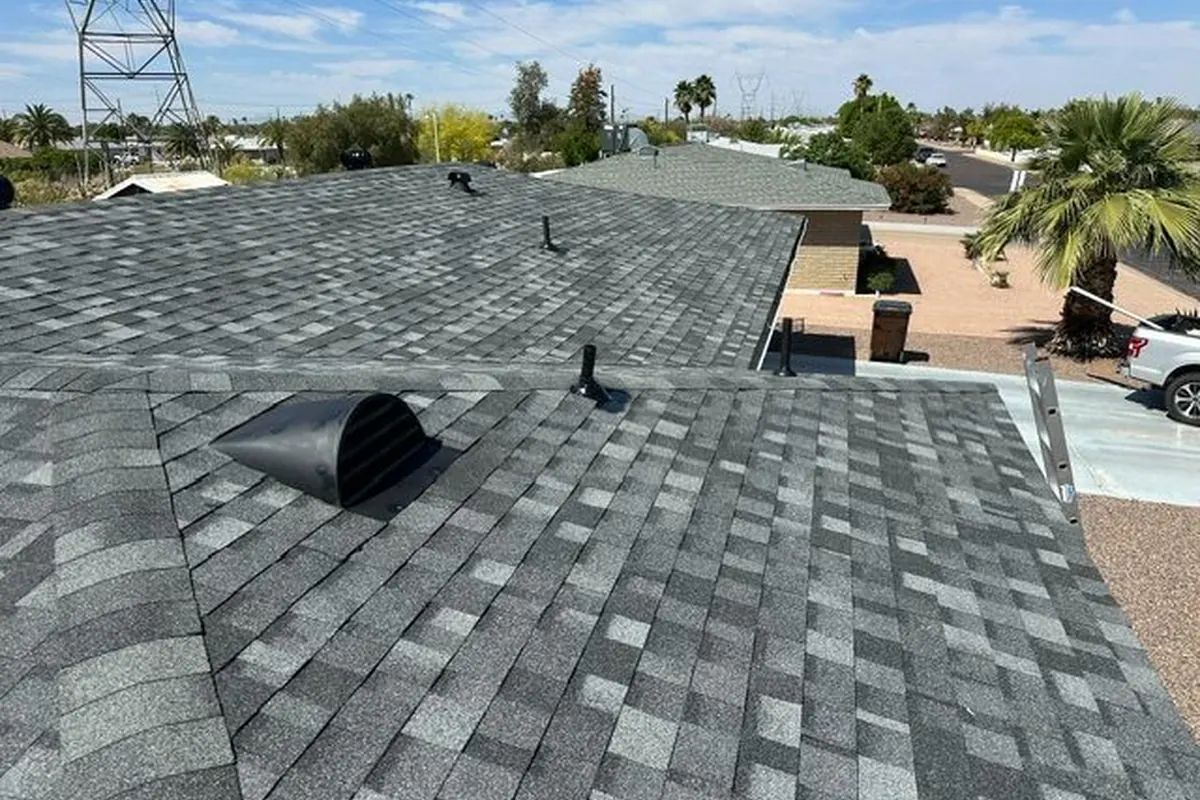
A roof leak gets worse every time it rains. Water soaks insulation, stains drywall, rots the roof deck and can lead to mold. If you see a drip, a fresh ceiling stain or a bubble in the paint, call or text (602) 339-9540 now. We respond fast to calls and texts.
Do this first
- Catch the water. Put a bucket or container under the drip and move belongings away.
- Relieve a bulging ceiling. If water is pooling above the drywall, a small hole at the center of the bulge lets it drain in a controlled way.
- Turn off power to any light fixture or fan where water is dripping.
- Photograph everything, inside and out, for the roofer and your insurer.
- Stay off the roof. A wet roof is dangerous, and walking on tile breaks it.
Why leaks are hard to find
The spot where water drips into your home is rarely the spot where it gets through the roof. Water runs along the underlayment, roof deck or rafters before it finds a path down, sometimes several feet away. That is why patching the area directly above a stain so often fails.
A proper leak repair starts with tracing. The roofer looks at the stain location, checks the attic for wet wood and water trails, and then examines the roof above and uphill from that area: the flashing, valleys, penetrations and underlayment.
The most common leak sources in San Tan Valley
Worn underlayment under tile
On tile roofs, the tiles shed most of the water, but the underlayment beneath them is the real waterproof barrier. In Arizona heat, it dries out and cracks over time. Arizona roofers commonly cite a lifespan of about 8 to 20 years. Leaks often show up first after a heavy monsoon storm, when wind drives rain under the tiles. If your tile roof was installed in the early 2000s and has had more than one leak, the underlayment is the likely culprit. See tile underlayment replacement.
Cracked, slipped or missing tiles and shingles
A single cracked tile or missing shingle exposes the layer beneath to sun and rain. Wind and foot traffic are the usual causes.
Pipe boots and roof vents
Plumbing vent pipes are sealed with rubber or lead boots. Rubber boots crack in the sun. Attic vents and exhaust fans have flashing that can lift or rust.
Valleys
Valleys carry more water than any other part of the roof. Debris buildup, worn valley metal and failed underlayment there cause many leaks.
Skylights, chimneys and AC stands
Anything that passes through the roof needs flashing that is layered correctly with the roofing around it. Caulk alone eventually fails in the heat.
Flat roof ponding and foam damage
On foam and flat roofs, water that ponds after a storm finds weak spots. Exposed foam, blisters, cracked seams and bird damage are common leak sources. See foam and flat roof repair.
How we fix a leak
- Trace it. Find the actual entry point, with attic inspection where needed.
- Show you. Photos of the problem and a written estimate before work begins.
- Fix the cause. Replace failed flashing, boots, underlayment or roofing, not just smear sealant over it.
- Repair the damage. Replace soft or rotted decking found during the repair.
- Confirm it. Photos of the finished work, and a follow-up check after the next rain if you want one.
Temporary vs. permanent repairs
During a storm, a permanent repair is not always possible or safe. In that case, the roofer can tarp or temporarily seal the area to stop water from getting in, and then schedule the permanent repair once conditions allow. If you need help right now, see emergency roof repair.
When a leak means a bigger problem
One leak is usually a repair. Several leaks in different areas, or the same leak coming back after repairs, often point to roof-wide wear, typically failed underlayment on tile roofs or brittle shingles on shingle roofs. The roofer will explain the options with photos so you can decide. A free roof inspection is the best way to see the whole picture.
Frequently asked questions
Why does my roof only leak during heavy storms?
Wind-driven rain during monsoon storms pushes water sideways and uphill, into gaps that normal rain never reaches. Leaks that appear only in big storms often point to worn underlayment or flashing.
Can I just put sealant on the leak?
Sealant can be a temporary stopgap, but it breaks down quickly in Arizona sun and often hides the real problem. A lasting fix addresses the flashing, underlayment or roofing that failed.
How much damage can a small leak cause?
More than most people expect. A slow leak can soak insulation and rot roof decking for months before a stain appears. It is worth fixing early.
Do you check the attic?
When it helps find the source, yes. Water trails and wet wood in the attic often lead straight to the entry point.