When a storm damages your roof, two things matter most: stopping water from getting in, and documenting the damage properly. We do both. Call or text (602) 339-9540. Text photos of the damage if you can.
Right after a storm: what to do
- Make sure everyone is safe. Stay away from downed lines, sagging ceilings and wet electrical fixtures.
- Photograph the damage before anything is cleaned up: debris in the yard, visible roof damage, and stains or water inside.
- Prevent more damage where it is safe: catch drips, cover belongings.
- Call or text us to secure the roof and inspect it.
- Notify your insurance company if the damage looks significant.
Types of storm damage we repair
Wind damage
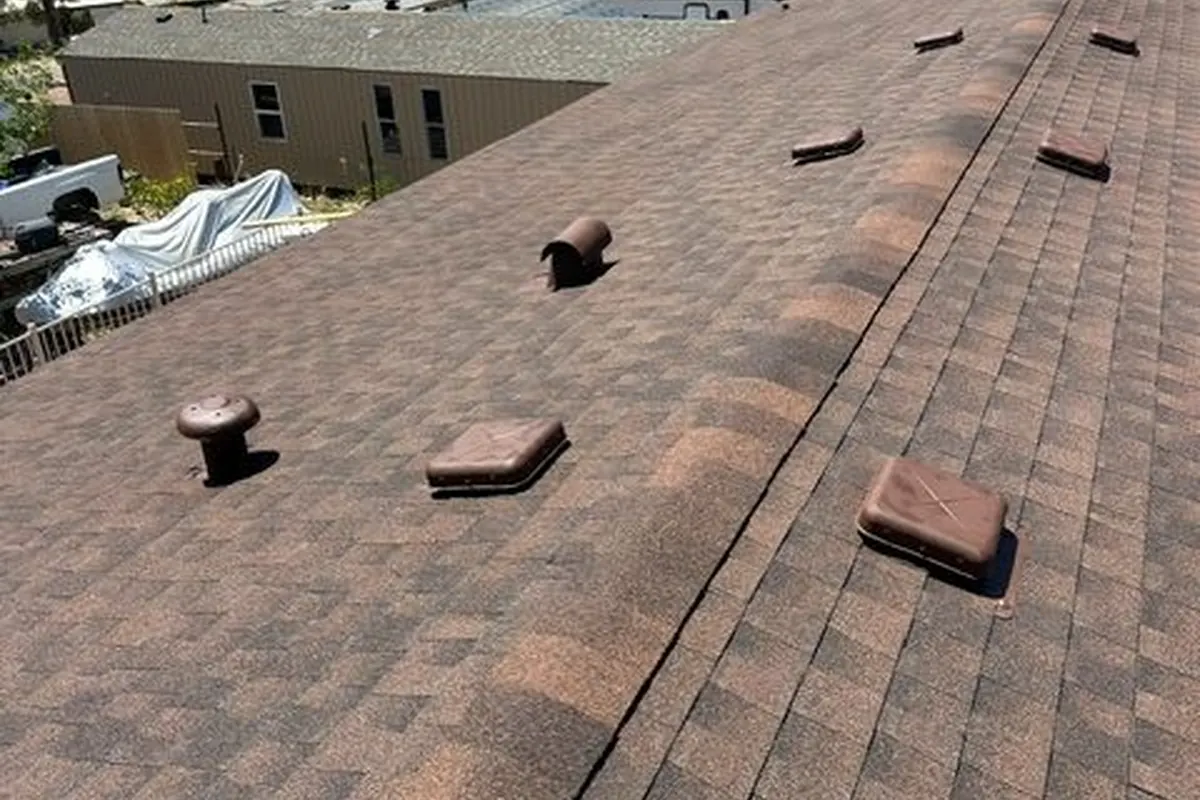
Arizona storms can produce strong straight-line winds and microbursts. Wind lifts the edges of shingles and breaks their seal, tears shingles off entirely, and lifts and drops tiles, cracking them. Ridge and hip caps are especially vulnerable. Even when nothing is missing, lifted shingles can leak in the next storm.
Rain intrusion
Heavy, wind-driven rain pushes water under tiles and shingles and into weak flashing. If the underlayment is already worn, this is when leaks start. See roof leak repair.
Hail damage
Hail is less common here than in other states, but it does happen. It cracks tiles, bruises shingles and knocks off granules, and it can puncture foam roof coatings.
Debris and tree damage
Palm fronds, branches, patio furniture and trampolines become projectiles in a microburst. Impacts crack tiles and can puncture the roof deck.
Foam and flat roof damage
Storms can tear foam coatings and clog drains and scuppers, leading to ponding water. See foam and flat roof repair.
Storm damage and insurance
Many homeowners policies cover sudden damage from wind, hail or storms, but not damage from age, wear or lack of maintenance. Coverage decisions are made by your insurer under your specific policy.
Here is how we help:
- Thorough documentation. The roofer photographs damaged areas, debris and interior impact, and records written findings.
- Securing the roof. Emergency tarping protects the home while the claim is processed. Insurers generally expect you to prevent further damage.
- A clear repair scope. You get a written estimate for the repair you can share with your adjuster.
- Being there for the adjuster. If it helps, the roofer can meet the adjuster to walk through the damage.
We recommend reading your policy and talking to your insurer directly about your coverage and deductible.
Storm damage vs. wear and tear
Adjusters look closely at whether damage is new or existing. Fresh breaks in tiles, recently torn shingles, debris in the yard and new interior stains all point to storm damage. Faded, brittle materials and long-standing leaks usually point to age. An honest assessment protects you. We will tell you what we see.
Storm season in the East Valley
Monsoon season officially runs June 15 through September 30, with the most active storms typically in July and August. Winter systems from November through March bring their own wind and rain. The best protection is preparation: clear valleys and drains, fix slipped tiles and lifted shingles, and trim overhanging branches before storms arrive. Want the full list? Text us for our free storm-season roof checklist.
Frequently asked questions
How do I know if my roof has storm damage?
Look for tile or shingle pieces in the yard, visible missing or lifted roofing, damaged flashing and new interior stains. Many types of damage are only visible from the roof, so an inspection after a major storm is a good idea.
Should I call my insurance company or a roofer first?
Make sure the home is safe and secured first. A roofer can tarp the roof and document the damage, which helps when you file the claim. Then contact your insurer.
How long do I have to file a storm damage claim?
Deadlines vary by policy and insurer. Check your policy or ask your insurer, and report damage promptly.
Can a storm damage a newer roof?
Yes. Strong winds can lift and break even new tiles and shingles, especially at edges, ridges and valleys.