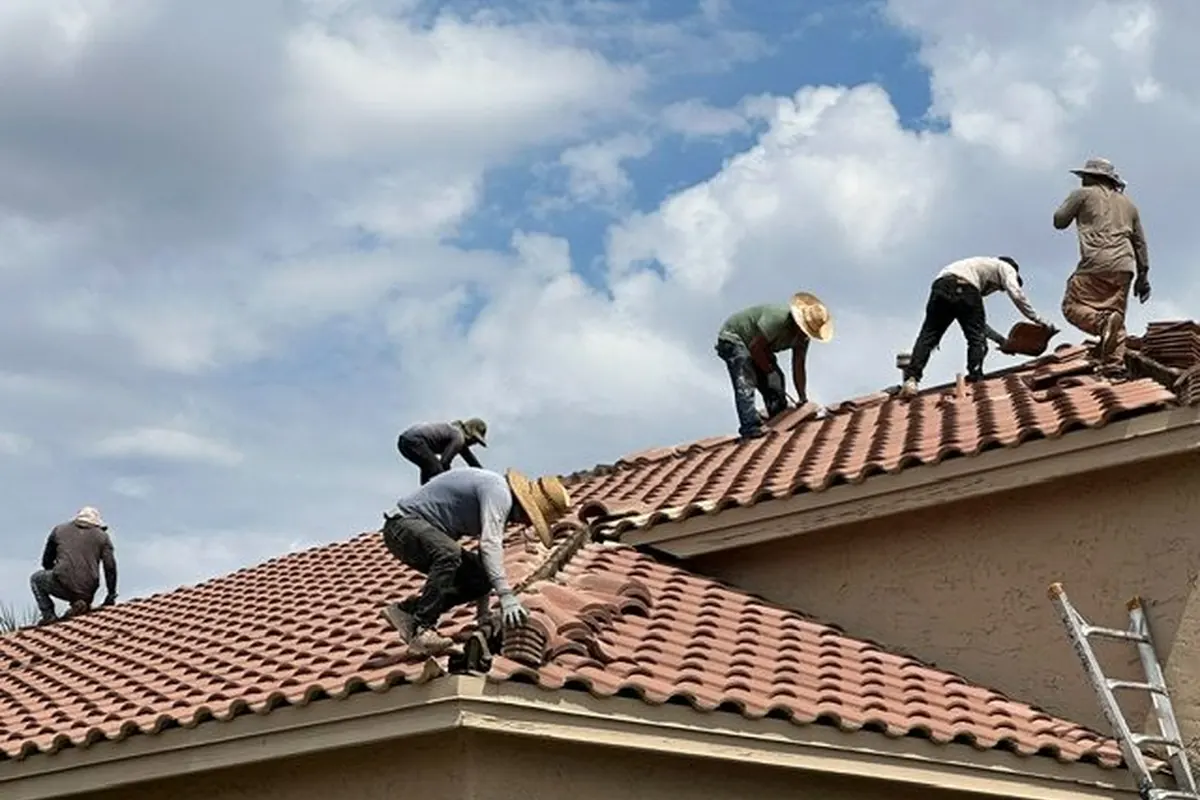
If your tile roof is 15 to 25 years old and leaks keep showing up, especially after storms, the problem is almost certainly the underlayment, not the tiles. An underlayment replacement (often called a "lift and relay" or "re-felt") removes the tiles, replaces the worn layer beneath, and reinstalls your existing tiles. You get a watertight roof without paying for new tile.
Call or text (602) 339-9540 for a free inspection and written estimate.
Why underlayment fails first
On a tile roof, the tiles shed most of the water and shield the roof from sun. The underlayment, a layer of felt or synthetic membrane over the roof deck, is the actual waterproof barrier.
In Arizona, that layer takes a beating. Heat bakes the oils out of traditional felt, making it brittle. It cracks where it bends over battens and at valleys, eaves and penetrations. Arizona roofers commonly cite an underlayment lifespan of about 8 to 20 years, while the tiles above it can last 50 years or more.
That mismatch is why so many San Tan Valley homes built in the early 2000s, in communities like Johnson Ranch, San Tan Heights and Pecan Creek, now need underlayment work even though the tiles look fine from the street.
Signs your underlayment is failing
- Leaks that appear during heavy, wind-driven storms
- Multiple leaks in different parts of the house
- Leaks that keep coming back after tile repairs
- Brittle, cracked or crumbling felt visible when a tile is lifted
- Dark stains or soft spots on the roof deck in the attic
- The roof is more than about 15 years old and has never been re-felted
The only way to know for sure is an inspection, where the roofer lifts tiles in several areas and checks the underlayment's condition.
How an underlayment replacement works
- Protect the property. Landscaping, pools and walkways are covered.
- Remove and stack the tiles. The tiles are carefully lifted and stacked on the roof or ground for reuse. Broken tiles are set aside.
- Remove old underlayment and battens. The old felt is stripped down to the deck.
- Inspect and repair the deck. Soft or rotted plywood is replaced.
- Install new underlayment. Modern underlayments, including heavier felt and synthetic or self-adhered membranes, are installed with proper laps.
- Replace flashing. Valley metal, pipe flashings and edge metal are replaced or upgraded as needed.
- Reinstall tiles. The original tiles go back on, with broken ones replaced by matching tiles, and new fasteners and ridge work.
- Clean up and photograph. Debris is hauled away and you get photos of each stage.
Underlayment replacement vs. full tile replacement
| Underlayment replacement | New tile roof | |
|---|---|---|
| Keeps existing tiles | Yes | No |
| Replaces the waterproof layer | Yes | Yes |
| Changes the look of the home | No | Yes, new color or profile possible |
| HOA approval | Often not needed if tiles are reused (check your HOA) | Often required |
| Relative cost | Lower | Higher |
For most homes with sound tiles, underlayment replacement is the better value. A full replacement makes sense when many tiles are damaged, discontinued or faded, or when you want a new look. See roof replacement for full options.
Can it be done in sections?
Sometimes. If the underlayment has failed in one area, such as a valley or a south-facing slope, the roofer may recommend replacing that section first. When failure is widespread, doing the whole roof at once is usually more cost-effective than repeated section repairs.
Timing
Most homes take several days, depending on roof size, pitch and weather. Many homeowners schedule underlayment work in fall, winter or spring, before the next monsoon season.
Frequently asked questions
How long does new underlayment last?
That depends on the product. Modern underlayments are generally more durable in heat than the basic felt used on many homes in the early 2000s. The roofer will explain the options and expected lifespan for each.
Will my tiles break during the process?
A small percentage of tiles may break when they are lifted, especially older ones. They are replaced with matching tiles. The estimate should cover replacement tiles.
Do I need HOA approval?
If you reuse the same tiles, many HOAs do not require approval, but rules vary. Check your HOA's guidelines before work starts.
Can I wait?
You can, but once underlayment starts failing, leaks become more frequent and can rot the roof deck, which raises the cost. If your roof is in that 15 to 25-year range, an inspection before storm season is a smart move.