If your roof is leaking, missing material or showing damage after a storm, the most important thing is to stop water from getting in. Call or text (602) 339-9540. We respond fast to calls and texts and can usually get a roofer out quickly for active leaks. Below, we explain what to do right now, what a proper repair includes, and how to tell whether a repair is enough.
If water is coming in right now
Act in this order. It limits the damage while help is on the way.
- Protect the inside. Move furniture and electronics, put a bucket under the drip, and lay down towels. If water is pooling in a ceiling bulge, a small hole at the lowest point lets it drain into a bucket instead of bringing the drywall down.
- Stay off the roof. Wet tile and shingle are slippery, and tile breaks under foot. Leave the roof to a roofer with the right equipment.
- Take photos. Photograph ceiling stains, wet insulation and any visible roof damage. They help the roofer and any insurance claim.
- Call or text us. Tell us when the leak started and where it shows up inside. Text photos if you can.
Common roof repairs in San Tan Valley
Most repairs on East Valley homes come down to a short list of problems.
Broken, slipped or missing tiles
Concrete and clay tile is durable, but tiles crack when someone walks on them, when debris hits them, or when wind lifts and drops them. Slipped tiles leave the underlayment exposed to sun, which shortens its life. A repair replaces broken tiles with matching ones, resets slipped tiles, and checks the underlayment beneath.
Missing or damaged shingles
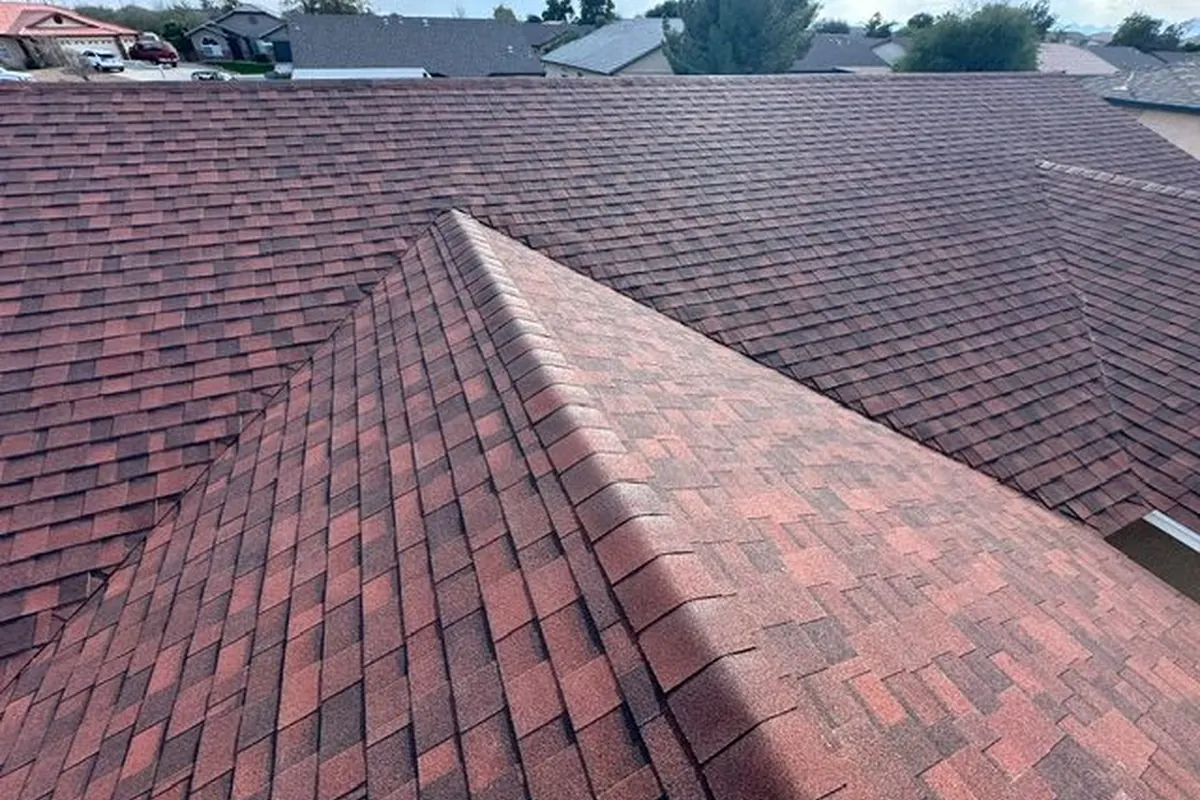
Wind can lift and tear shingles, especially older ones that have dried out in the sun. A repair replaces the damaged shingles, re-seals the surrounding courses, and checks for nail pops and exposed fasteners.
Flashing and penetration leaks
Many leaks start where something passes through the roof: plumbing vents, exhaust fans, skylights, chimneys, solar mounts and air conditioning stands. Sealants crack in the heat, and metal flashing can lift or rust. A repair replaces the flashing or boot and seals it correctly rather than smearing more caulk over the problem.
Valleys, ridges and transitions
Water concentrates in valleys, where two roof slopes meet. Ridge caps and the transitions between a pitched roof and a flat section are also common leak points. These areas need careful flashing and sometimes new underlayment.
Damaged decking
When a leak has gone on for a while, the plywood or OSB beneath can soften or rot. A roofer replaces the damaged decking before installing new underlayment and roofing over it.
What a proper roof repair includes
A good repair fixes the cause of the problem, not just the spot where water showed up. Water often travels along the deck or rafters before it drips, so the stain on your ceiling may be several feet from the actual entry point.
A thorough repair usually includes:
- Finding the source. The roofer traces the leak from the inside stain back to where water enters the roof.
- Photo documentation. You see photos of the problem before work starts, and of the finished repair.
- Matching materials. Replacement tiles and shingles are matched as closely as possible in profile and color.
- Fixing the layers underneath. Underlayment and flashing are repaired or replaced where they have failed, not covered over.
- Cleanup. Broken tile, nails and debris are removed from the roof and yard.
Repair or replacement?
A repair is usually the right call when the damage is limited to one area and the rest of the roof is in good shape. Replacement starts to make sense when:
- The roof has several leaks in different areas.
- Shingles are brittle, curling or losing granules across the whole roof.
- A tile roof is more than about 20 years old and the underlayment is cracking or crumbling.
- Repairs keep coming back in the same places.
On a tile roof, the middle option is often the best value. An underlayment replacement keeps your existing tiles and replaces only the worn layer beneath. For full details, see roof replacement.
How the repair process works
- 1Call or text
Tell us what you are seeing, and send photos if you can.
- 2Roof visit
A roofer comes out, inspects the problem area, and photographs what they find.
- 3Clear written estimate
You get the scope and price in writing before any work starts.
- 4Repair and wrap-up
The work is done, the site is cleaned, and you see photos of the finished repair.
Roof repair for every major roof type
Each roof type has its own failure points and repair methods:
- Tile roof repair: broken tiles, slipped tiles, underlayment and flashing.
- Shingle roof repair: wind damage, nail pops, worn shingles.
- Foam and flat roof repair: blisters, exposed foam, ponding water.
If you are not sure what kind of roof you have, text a photo and we will tell you.
Frequently asked questions
How fast can you get someone out for a roof repair?
Active leaks and storm damage are prioritized, and we answer calls and texts fast. Exact timing depends on weather and demand, and we will give you a realistic arrival window when you call.
Can you do a temporary repair during a storm?
Yes. When a permanent repair is not safe or possible right away, a roofer can tarp or temporarily seal the area to stop water. The permanent repair follows once conditions allow.
Will my homeowners insurance cover the repair?
It depends on the cause and your policy. Sudden damage from wind or a storm is often covered, while wear and age usually are not. We document the damage with photos you can share with your insurer.
Do you match my existing tiles or shingles?
We match profile and color as closely as possible. Older or discontinued tiles can be harder to match, and the roofer will show you the options before installing.
Is the estimate really free?
Yes. The estimate is free and carries no obligation. You get the scope and price in writing before any work is scheduled.